Jordanian Labneh: What Makes the Jerash-Style Version Special
Jordanian labneh is thick, tangy, and finished with olive oil. Khashoka serves the Jerash-style version in Richardson as part of a labneh-forward mezze table.
What is Jordanian labneh?
Labneh is yogurt that has been strained until most of the whey is gone, leaving behind something thick enough to hold its shape. It is not a spread in the Western sense, not a condiment sitting on the side. In Jordanian homes it is a dish in its own right, set at the center of the table with olive oil pooled on top and bread close by.
That distinction matters. Labneh shows up at the morning spread alongside olives, eggs, and zaatar. It appears at mezze. It is the kind of thing that gets passed around the table before anyone has decided what the meal is going to be, and it outlasts most of the other dishes because people keep coming back to it.
Why does the Jerash style matter?
Jerash is a city in northern Jordan, known for its Roman ruins but also, to Jordanians, for its countryside character. Labneh made in or associated with that region carries what most Jordanians would call a village quality: dense, tangy, made the way families make it rather than the way factories scale it. The name جرشية (Jarashieh) signals that origin and that standard.
This is not a marketing distinction. For Jordanians, the difference between labneh that carries a village identity and labneh that does not is immediately legible in the texture and the sourness. اكلنا ريفي, our food is countryside, is not a slogan about the past. It describes how the food is still made.
How olive oil transforms the dish
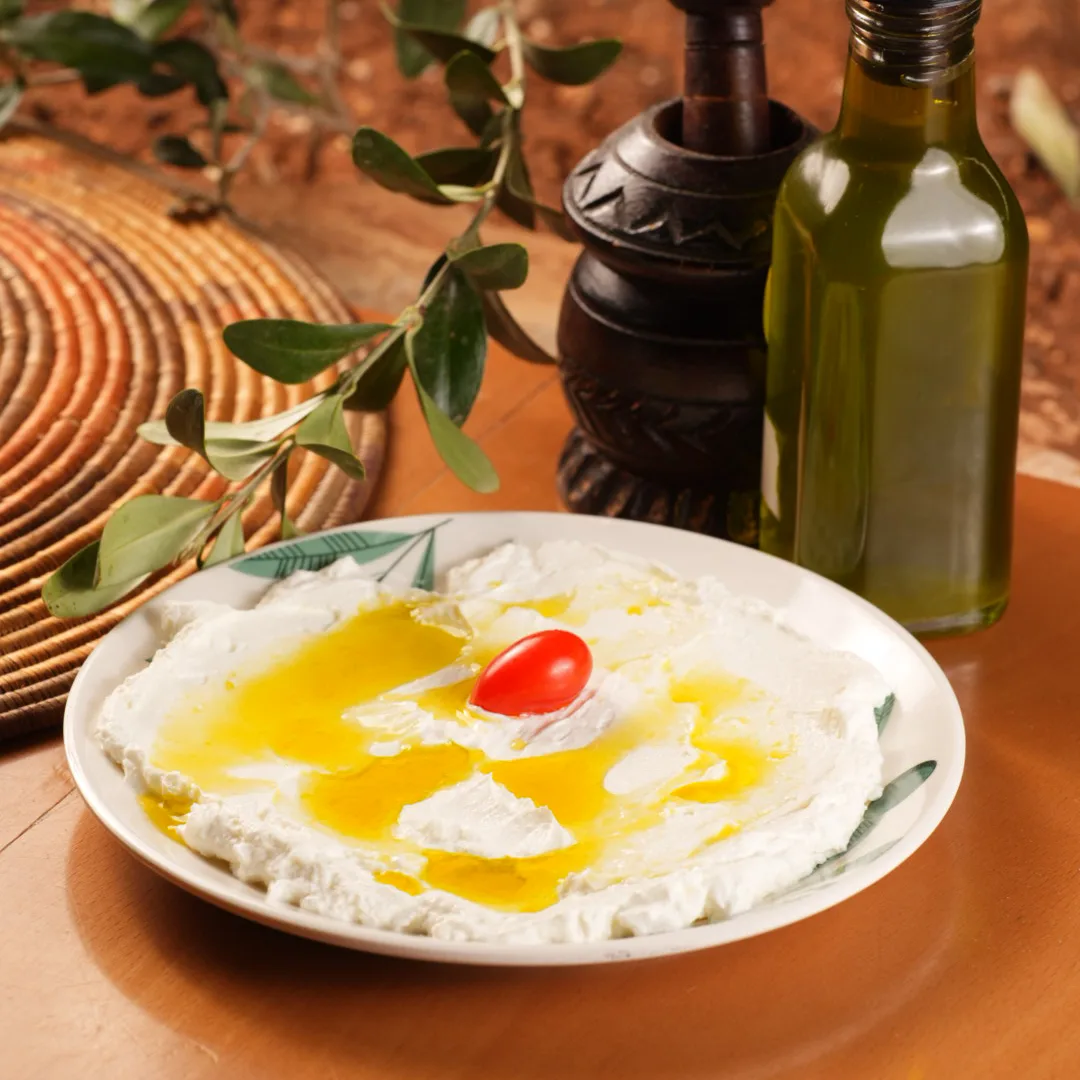
Labneh on its own is sharp and dense. The olive oil changes the whole experience: it softens the tang, gives the surface a slight richness, and carries whatever herbs or spices come with it. The oil is not a garnish. It is part of the dish's structure.
At Khashoka, that olive oil comes from Jordan itself. As Tahera Rahman reported for NBC DFW, roughly 90 percent of Khashoka's spices, olive oil, and tahini are imported from Jordan. And as the founders told Scene Eats, where other restaurants use natural ghee and oil, Khashoka cooks exclusively with olive oil, a difference that "translates into an entirely new taste." That sourcing decision shows up most clearly in a dish as simple as labneh, where the oil is half the plate.
What Khashoka serves: Local Labneh (لبنة جرشية)
The dish is called Local Labneh on the menu, listed in Arabic as لبنة جرشية. It is $8.00: labneh and olive oil, nothing else obscuring what the ingredients actually taste like. The menu motto says it plainly: Served the way Amman serves it.
That is one entry point. The Local Dishes section builds out into a full labneh table from there.
| Dish | Arabic | Price | What's in it |
|---|---|---|---|
| Local Labneh | لبنة جرشية | $8.00 | Labneh and olive oil |
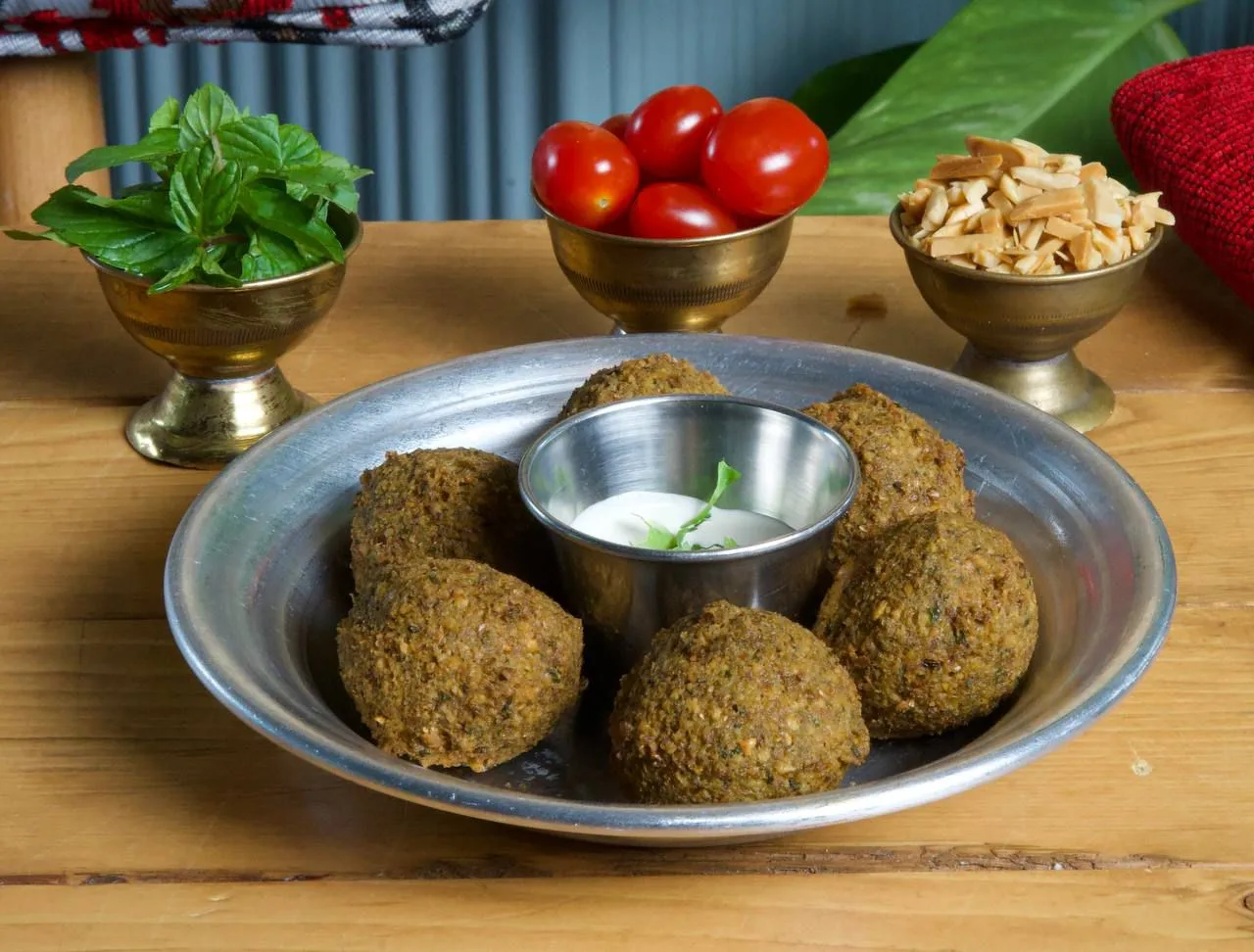
| Labneh with Chili | لبنة بالشطة | $8.00 | Labneh balls with chili and olive oil |
| Labneh & Makdous | لبنة ومقدوس | $10.00 | Labneh mixed with makdous, walnuts, and olive oil |
| Labneh Mudahbara | لبنة مدحبرة | $10.00 | Labneh balls with walnuts and olive oil |
| Labneh with Zaatar | لبنة وزعتر | $10.00 | Jordanian labneh and zaatar |
Every one of these is a shared plate. You order them for the table, not for yourself.
How to eat labneh the Jordanian way
There is a folk saying on Khashoka's menu page about the wide خاشوكة (khashoka) spoon: "When we ask her to eat she says she's not hungry, but the moment the wide Khashoka spoon comes out, suddenly she's asking for hers." The spoon gathers. But with labneh, the bread is the real vehicle.
Jordan's national airline, Royal Jordanian, features Khashoka among its Amman dining picks and puts it simply: "Prepare to put your spoons down and dig in using your fingers and pieces of bread." Tear a piece of bread, press it into the labneh, drag it through the olive oil. That is how it is done, and that is how it lands at the table here.
Come to Khashoka at 1057 S Sherman St, Ste 130, Richardson, TX 75081. See the full menu and order pickup through Tabit, with an estimated prep time of about 35 minutes. Straight from Amman's streets to your table.
Where does labneh fit in a full Jordanian spread?
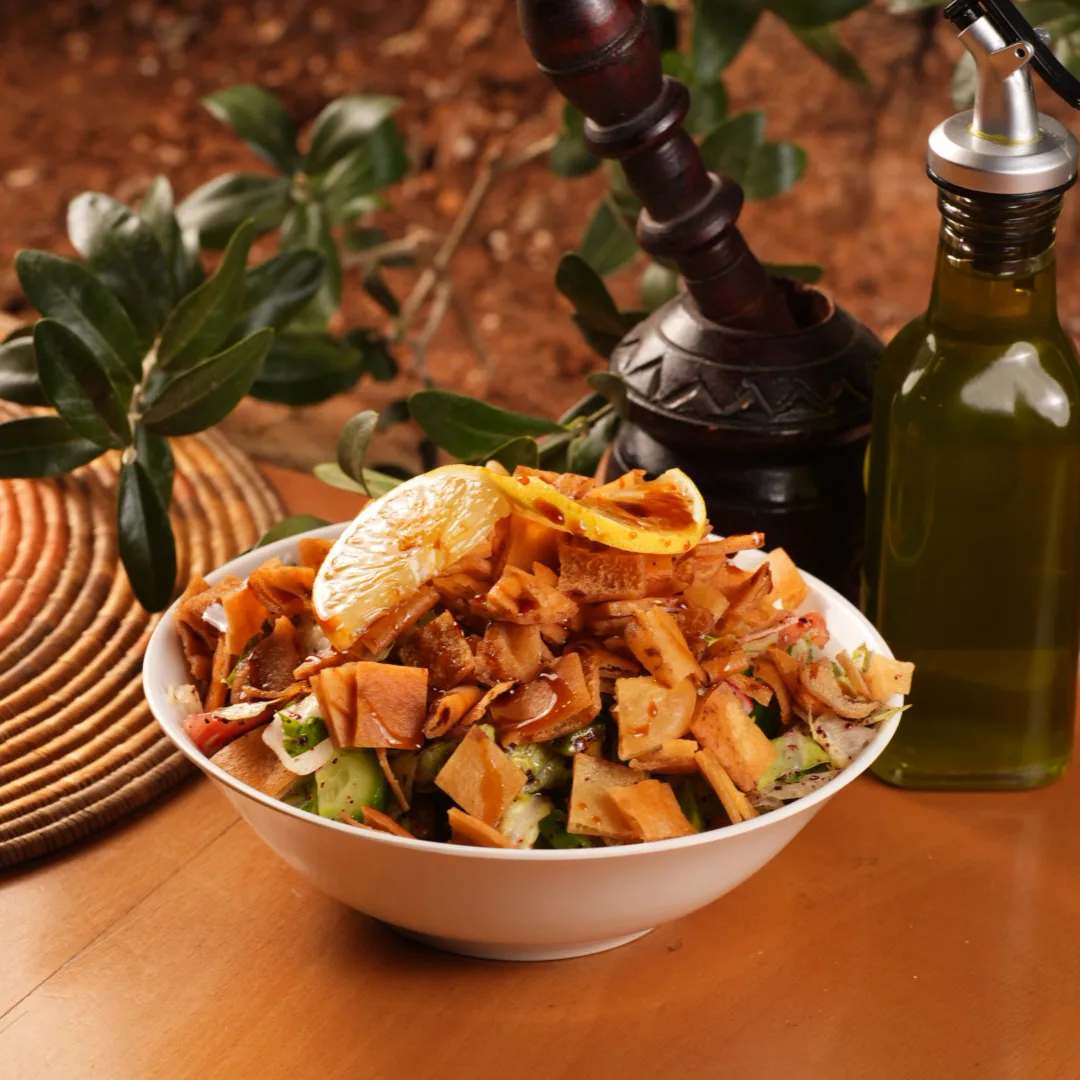
Local Labneh works as an anchor for a broader mezze table. Pair it with Khashoka's fattoush for the bright, acidic contrast that cuts through the richness of the labneh and olive oil. Add a few more plates from the Local Dishes section, pass the bread, and you have a Jordanian spread worth sitting at for a while. بيت الكل, everyone's home.