Summer Tomato Dishes: The Middle Eastern Way, From Amman to Richardson
A look at how Jordanian cooking treats peak-season tomatoes through two Khashoka menu items: the cooked Tomato Skillet and the raw Farmers Salad, framed around the restaurant's Jordan-to-Richardson sourcing.
Why summer tomatoes matter in Middle Eastern cooking
Tomatoes are the one ingredient where Jordanian cooking and Texas summer line up perfectly. About 90% of Khashoka's food ingredients come from Jordan, from the olive oil to the spice mix, while produce and meat are sourced locally and fresh, as Khashoka's owner told NBC DFW while describing the kitchen's approach to sourcing. Tomatoes sit right at that seam: a local crop, cooked or dressed with imported olive oil, treated the way it's treated in Jordan.
Two dishes on Khashoka's menu show what that means in practice. One is cooked low and slow until the tomatoes break down into something closer to a sauce. The other is raw, cut and dressed minutes before it reaches the table. Both start from the same fruit at the same point in the season. What separates them is heat, and what heat does or doesn't do to a ripe tomato.
The Tomato Skillet: slow-cooked simplicity
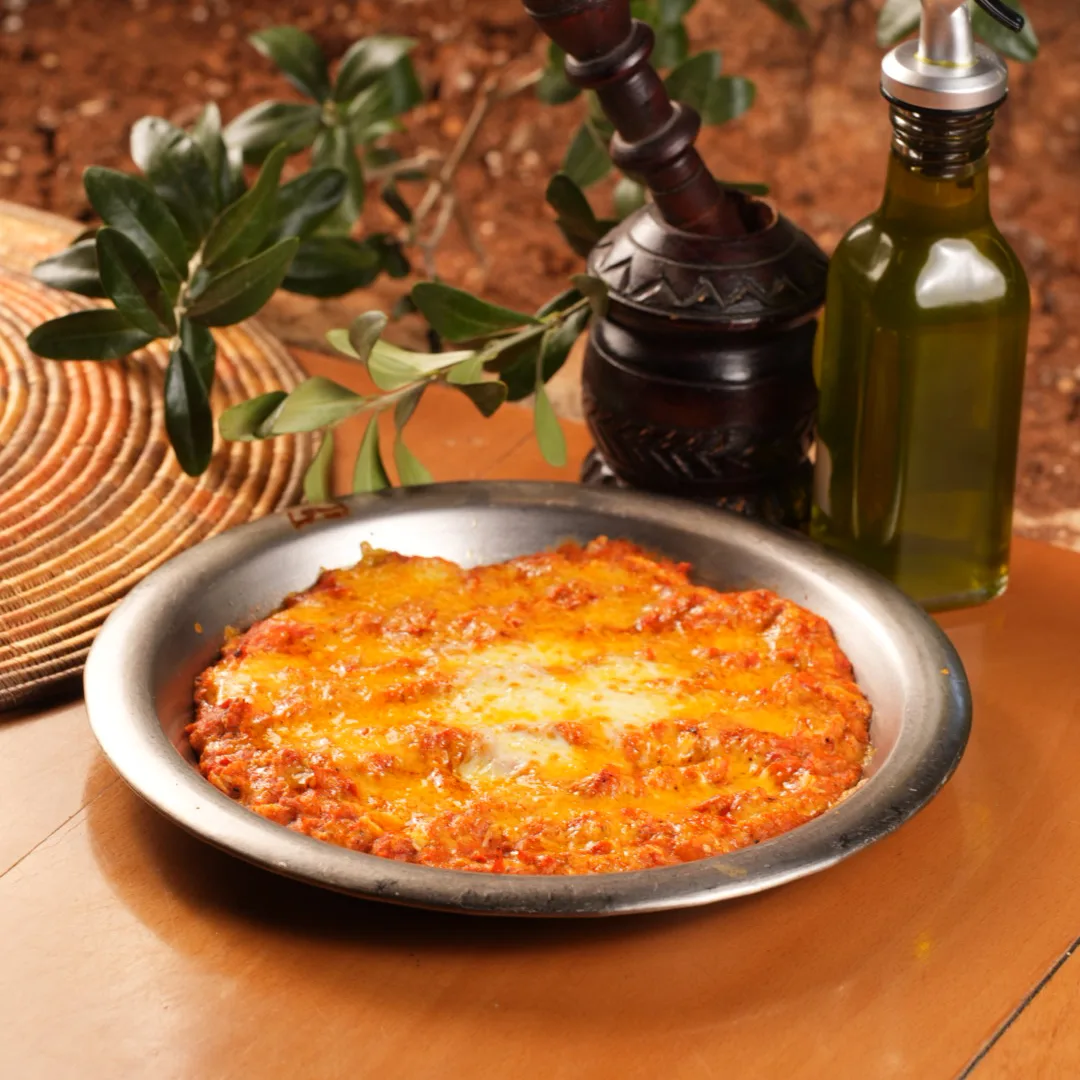
Khashoka's Tomato Skillet is $9: cooked tomatoes, garlic, and olive oil, nothing else added to the pan. A version with beef added runs $13, tomatoes cooked down the same way with meat folded in. Neither recipe asks for a long ingredient list. It asks for tomatoes ripe enough that they don't need help.
Cooking tomatoes this way does something raw tomatoes can't. Heat breaks the cell walls down, releases the juice, and lets it reduce into a thicker, more concentrated liquid around the garlic. The olive oil carries the garlic's flavor through the whole pan instead of leaving it as a separate note. It's a method built for tomatoes at their peak, not a rescue for tomatoes past it. A pale, underripe tomato has less sugar and less juice to give up, so the skillet comes out thin and flat. A tomato picked at the height of summer gives the pan everything it needs.
This is also a dish that sits well between two people or gets split across a table, the pan itself doing double duty as the serving piece. It's the kind of home cooking that shows up on a weekday, not a special occasion, which is part of why it belongs on a breakfast-and-lunch menu instead of a dinner-only one.
The Farmer's Salad: brightness and crunch
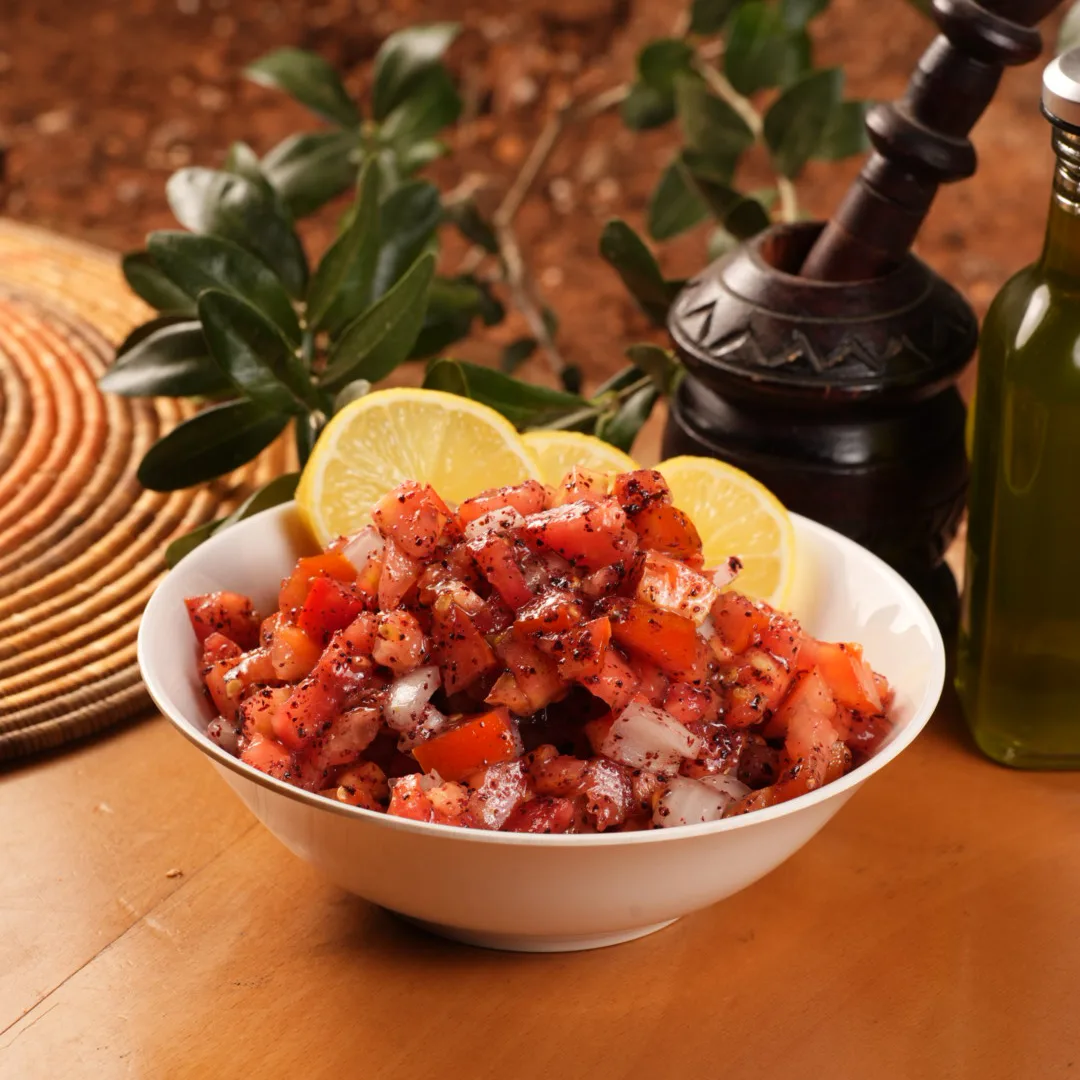
The Farmers Salad is $9: tomatoes, onions, sumac, olive oil, and lemon juice. No cooking, no reduction, nothing softened. The whole point is the opposite of the skillet: let the tomato stay raw, let its acidity and water content do the work, and use the dressing to sharpen rather than transform it.
Sumac is doing something specific here. It's a dried, ground berry with a tart, almost lemony edge, but without the citric acid that vinegar or bottled lemon dressings usually bring. Paired with fresh lemon juice and olive oil, it gives the salad a layered sourness instead of a flat one, with raw onion cutting through both for bite. It's a short ingredient list because a ripe tomato doesn't need much covering up. This is the same logic behind Khashoka's fattoush salad, another Levantine salad where sumac and lemon do most of the dressing's work, though fattoush adds toasted bread and more vegetables to the mix.
Set next to the skillet, the contrast is the point. One dish is heat working a tomato into something denser and sweeter. The other is a tomato left alone, dressed just enough to show what raw acidity and a ripe summer crop taste like side by side with onion and oil.
When to order these dishes at Khashoka
Texas tomatoes hit their peak from June through early September, which is the window both of these dishes are built for. Order either one, or both, at 1057 S Sherman St in Richardson, open Sun-Thu 9AM-10PM and Fri-Sat 9AM-11PM. Dine in and eat both side by side, or order pickup through Tabit, with an estimated prep time of about 35 minutes. A glass from Khashoka's fresh juices rounds out either plate without competing with the tomato.
The skillet and the salad aren't competing dishes on the menu. They're two answers to the same question: what do you do with a tomato this good? One answer is heat. The other is restraint. Both come from the same sourcing logic, local produce meeting a kitchen that treats olive oil and technique as inherited, not improvised. See the full menu to plan a plate around either one.
Frequently asked questions
What is the best way to cook tomatoes in the summer?
When tomatoes are at their ripest, less cooking usually serves them better. A short simmer with garlic and olive oil, like Khashoka's Tomato Skillet, concentrates their sweetness without masking it. Raw preparations, like a farmer's salad with sumac and lemon, work just as well when the tomato itself is doing the heavy lifting.
What makes a Middle Eastern tomato salad different from other tomato salads?
The dressing usually leans on sumac instead of vinegar. Sumac is a dried, ground berry with a tart edge and no citric acid, so it sharpens a salad without the sourness vinegar brings. Paired with olive oil, lemon juice, raw onion, and ripe tomatoes, it's a simpler build than most Western tomato salads, with fewer ingredients doing more work.
Is a tomato skillet the same as shakshouka?
No. Khashoka's Tomato Skillet is cooked tomatoes, garlic, and olive oil, served as a pan dish on its own or with beef added. Shakshouka is a separate item on the menu: tomato and egg covered with cheese. Both start from cooked tomatoes, but they land as different dishes with different textures and different roles at the table.