What Is Manakish? The Levantine Flatbread Canvas
A plain-answer explainer on manakish, the Levantine flatbread topped with zaatar, cheese, or meat, and how it compares to pizza and to Khashoka's own breakfast menu in Richardson.
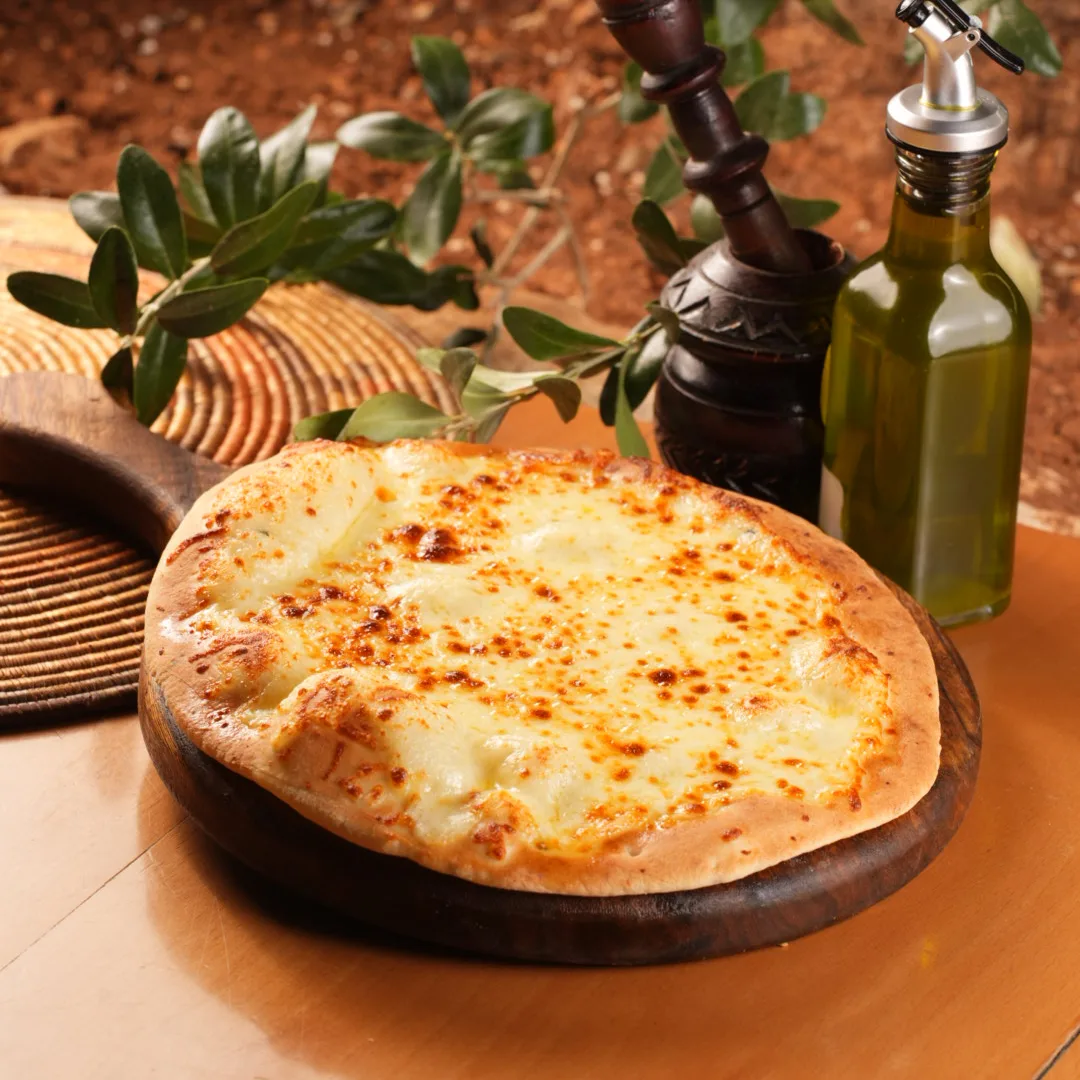
Manakish (مناقيش) is a flatbread baked with toppings pressed straight into the dough before it goes in the oven, not layered on after like most pizza. The most common version carries zaatar, the wild thyme blend, brushed with olive oil so it soaks into the crust as it bakes. Other versions swap in cheese, meat, or a mix of both.
What is manakish, exactly?
Manakish is a Levantine flatbread, thinner than a pizza crust and baked hot and fast so the edges crisp while the center stays soft. The dough is stretched thin, dimpled with fingertips, then topped and baked until the underside browns. Zaatar and olive oil is the classic version; cheese, meat, and combination toppings are common variations across the region.
At Khashoka, manakish is its own section on the menu, separate from the pans and eggs that make up the rest of breakfast. That placement matters. It's not an afterthought item, it's treated as a category with its own range of toppings, the same way a menu might dedicate a whole section to salads or skillets.
What makes manakish different from pizza?
The comparison to pizza is fair as a starting point, but it breaks down fast once you look at the mechanics. Pizza dough is usually proofed longer and baked to a chewier, thicker structure that can hold wet toppings like sauce and a heavy layer of cheese. Manakish dough is thinner and the bake is quicker, which is why the toppings stay dry: zaatar and oil, a layer of cheese, or a spoonable meat mixture, never a sauce base.
Royal Jordanian Airlines, the country's national carrier, describes the eating style at Khashoka itself as hands-on: "Prepare to put your spoons down and dig in using your fingers and pieces of bread." Manakish fits that same logic. You fold it, you tear it, you don't cut it with a knife and fork the way you might a pizza slice.
What toppings does Khashoka put on manakish?
Khashoka's manakish menu runs from the classic zaatar version to combinations built for a heartier plate. Here's the full range:
| Manakish | Price | Topping |
|---|---|---|
| Wild Zaatar & Cheese Pie | $8 | Local cheese, extra virgin olive oil, thyme leaves |
| Zaatar | $8 | Wild thyme mix |
| Cheese | $6 | Mozzarella cheese |
| Mix Cheese | $7 | Mozzarella, cheddar, and halloumi |
| Turkey | $8 | Turkey with mozzarella |
| Halloumi | $8 | Halloumi cheese |
| Zaatar & Cheese | $8 | Zaatar and mozzarella |
| Cheese Muhammara | $7 | Cheese muhammara blend |
| Meat Pie | $12 | Minced beef, tomato, onions, pomegranate molasses |
The zaatar version is the one worth ordering first if you've never had manakish. Wild thyme has a bitter, slightly resinous edge that plain oregano doesn't carry, and the olive oil underneath keeps that flavor from turning sharp. From there, the meat pie is the furthest departure: minced beef cooked down with tomato, onion, and pomegranate molasses turns the flatbread into something closer to a savory tart than a breakfast bread.
Where does manakish fit in a Jordanian breakfast?
Manakish belongs to the same table as labneh, olives, foul medames, and eggs, the mezze-style spread that makes up a Jordanian breakfast. Nobody eats manakish as a single, isolated dish; it's one plate among several, torn and passed around. Community Impact's coverage of Khashoka's Richardson opening noted the menu spans "hummuses and dips, salads and skillets" alongside its heartier pans, and manakish sits right at that intersection: bread, but built to be shared across a table that already has several other things going on it.
That's also why manakish resists a single-serving frame. It's cut into wedges or folded and handed off, which is closer to how flatbread works everywhere in the region, not a Richardson-specific habit.
For anyone building a first visit around it, the Jerash-style labneh and a plate of manakish cover both ends of a Jordanian breakfast, tangy and rich against crisp and herbal. Read more about the full Jordanian menu at Khashoka for how the rest of the table builds out from there.
Manakish is available for pickup through Tabit, or as part of a dine-in breakfast spread. Visit the Richardson location to see the full spread it's part of.
Frequently asked questions
Is manakish eaten for breakfast or any time of day?
In Jordan it's most associated with breakfast and morning gatherings, since the dough bakes fast and pairs naturally with labneh, olives, and tea. That said, it isn't limited to mornings. On Khashoka's menu it sits alongside pans, eggs, and skillets, so it works as a light lunch or a shared starter just as easily.
What's the difference between zaatar manakish and cheese manakish?
Zaatar manakish is topped with the wild thyme blend and olive oil, giving it an herbal, slightly bitter edge. Cheese manakish swaps that for melted mozzarella, which bakes softer and milder. Khashoka also lists a zaatar and cheese version and a mix cheese option with mozzarella, cheddar, and halloumi, so the two approaches aren't mutually exclusive.
Can I order manakish with meat instead of zaatar or cheese?
Yes. Khashoka's menu includes a turkey manakish topped with mozzarella and a meat pie version made with minced beef, tomato, onions, and pomegranate molasses. Both move manakish from a mezze-table piece into something closer to a full plate on its own.