What Is Mansaf? Jordan's National Dish, Explained
A plain-answer explainer on mansaf, Jordan's national dish, covering jameed, communal eating tradition, and where to find it in Richardson.
What is mansaf?
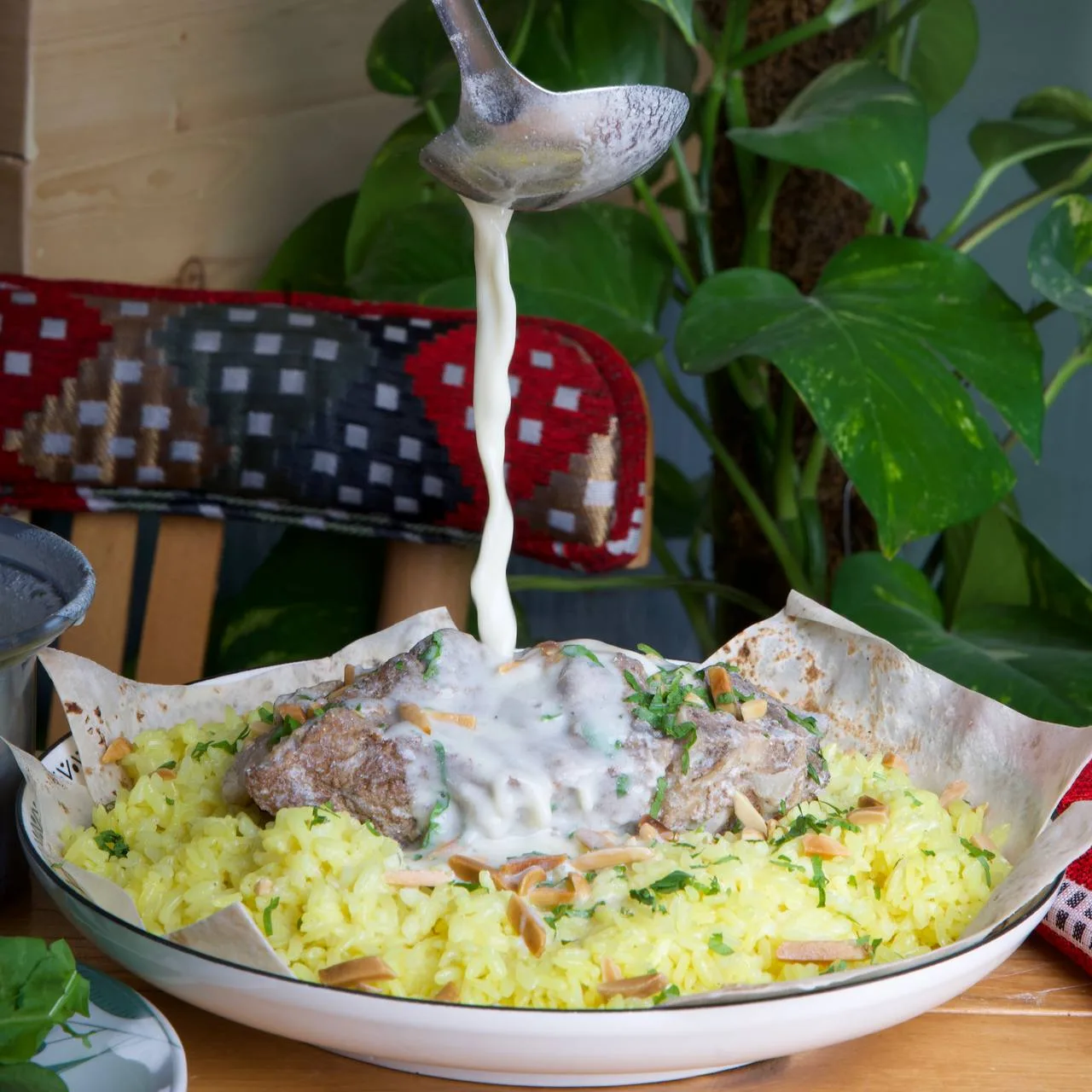
Mansaf is Jordan's national dish: lamb cooked until it falls off the bone, served over rice, and bathed in jameed, a fermented yogurt sauce with a distinctive sour tang. It's finished with toasted nuts and eaten from one large shared platter rather than individual plates. As Community Impact reported, mansaf is "a rice and lamb dish considered the national dish of Jordan."
Where does mansaf come from?
Mansaf traces back to Bedouin tradition, where it developed as food for a community, not a single diner. The dish shows up at weddings, funerals, religious holidays, and ordinary Friday lunches alike. It's less a restaurant order and more a marker of occasion: when mansaf comes out, something in the day matters.
That's still true in Jordan today. It's not a museum-piece recipe pulled out for tourists; it's what a family cooks when people need to gather.
Why does jameed matter so much?
Jameed is dried, fermented sheep's-milk yogurt, sold in hard balls that get rehydrated and simmered down into a sauce. That process is what gives mansaf its sour backbone, a flavor a cream sauce or a spoon of plain yogurt can't reproduce. Without jameed, it's something else. We don't shortcut it or substitute sour cream and call it close enough; the real thing is what makes the real thing.
At Khashoka, the Jordanian Mansaf ($29) is built the same way: rice, lamb, Jordanian jameed, and nuts, on one platter meant for the table, not a single seat.
How is mansaf traditionally eaten?
Mansaf is a hands-on, shared meal. Diners gather around the platter, often eating by hand, pulling lamb and rice together with a scoop of jameed sauce. That's the whole point of the dish: it isn't portioned out ahead of time, it's shared as it's eaten. A wide serving spoon, the kind Khashoka is named for, is often what brings the platter to the table in the first place.
Where can you get real mansaf in DFW?
Sourcing is most of the answer. About 90% of Khashoka's spices, olive oil, and tahini come directly from Jordan, a fact the owner shared when Tahera Rahman reported on DFW restaurants preparing for the World Cup for NBC DFW. That sourcing extends to jameed itself: it isn't a fermented-yogurt approximation made locally, it's the real ingredient.
Khashoka serves mansaf at 1057 S Sherman St in Richardson, made for sharing across a table, not portioned for one. Bring the people you'd bring to a Friday lunch.
See the menu or call (469) 277-7477 to ask about pickup timing.
What pairs well with mansaf?
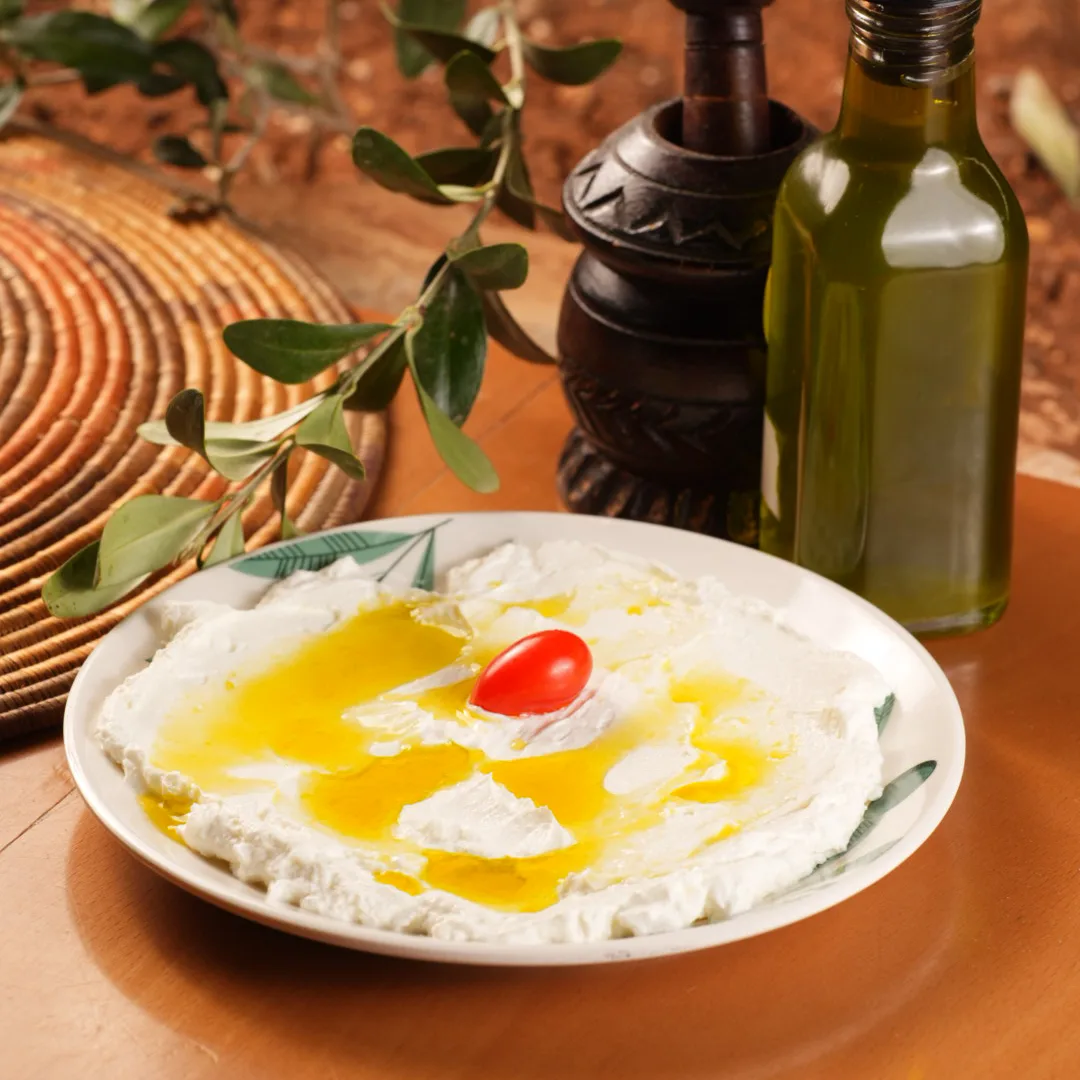
Start the table with mezze that echoes mansaf's fermented tang: labneh, makdous, or shanklish all carry a similar sourness that plays off the jameed sauce instead of competing with it. Add a salad like fattoush or tabbouleh for crunch and acid to cut the richness of the lamb. You can read more about the labneh side of that table in our post on Jerash-style labneh.
Frequently asked questions
What is jameed and why does mansaf need it?
Jameed is dried, fermented sheep's-milk yogurt, rehydrated and cooked down into the tangy sauce that goes over mansaf's lamb and rice. Without it, the dish is something else entirely; a cream sauce or plain yogurt gravy doesn't produce the same sour depth. Jameed is what makes mansaf mansaf, not a stand-in ingredient.
Is mansaf eaten with hands or utensils?
Traditionally, mansaf is eaten by hand, gathered around a shared platter rather than plated individually per person. That communal setup is part of why it's served at weddings, funerals, holidays, and Friday lunches: the meal itself is built around people eating from the same dish together, not around individual portions.
What should I order alongside mansaf at Khashoka?
Mansaf pairs well with a mezze start: labneh, makdous, or shanklish, since the tang in jameed sauce plays off similarly tangy fermented dishes. Rice with nuts and parsley is already part of the mansaf plate, so round out the table with a salad like fattoush or tabbouleh for crunch and acidity.