Beef Sajia: The Sizzling Pan That Feeds a Table
Beef sajia is Khashoka's one-pan dish of beef, onions, bell peppers, and cherry tomatoes, sizzled hot and built for a shared table at $25, dine-in or Tabit pickup in Richardson.
What is beef sajia?
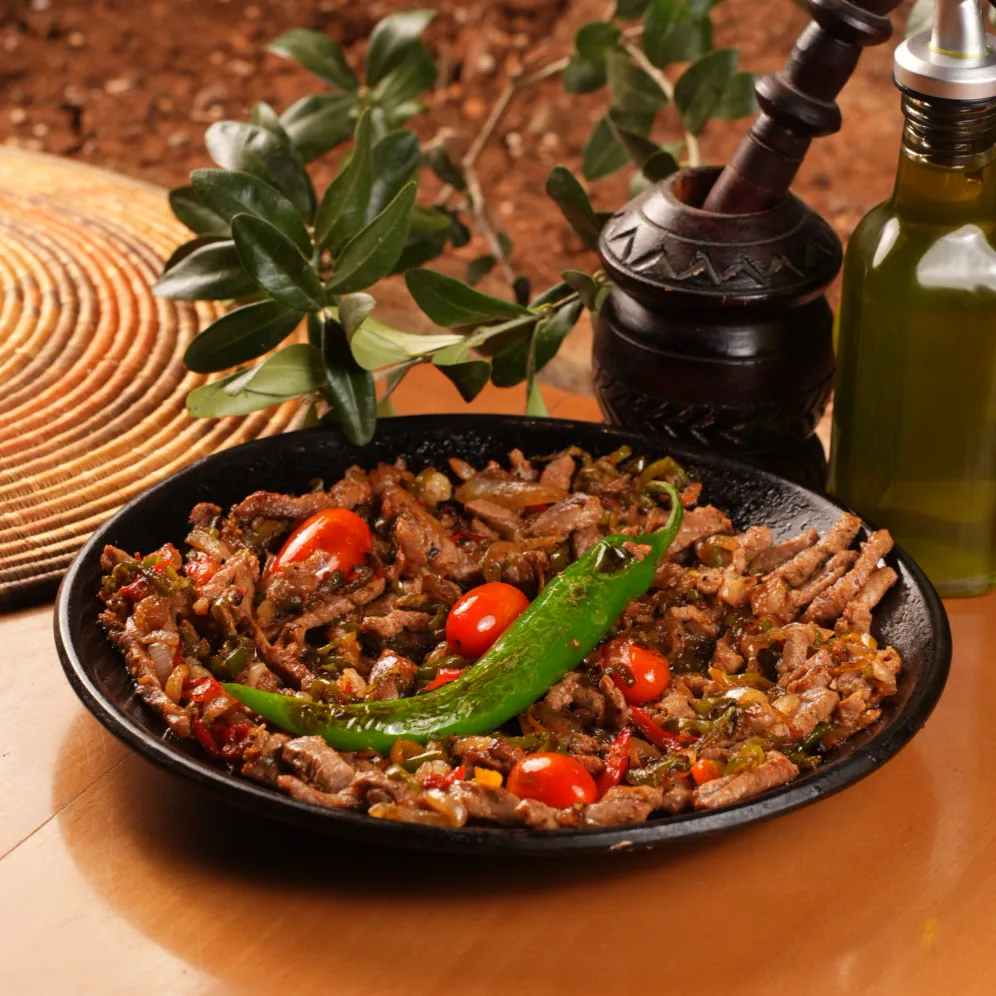
Beef sajia (صاجية لحم) is a one-pan dish of beef cooked down with onions, bell peppers, and cherry tomatoes, sizzled hot and brought straight to the table. At Khashoka in Richardson, it's $25, no sauce built around jameed, no ties to mansaf. It stands on its own: beef, vegetables, heat, and the pan that carries all three to the table still sizzling.
The dish gets its name from the sajia pan itself, the vessel it's cooked and served in. Onions soften first, then peppers and cherry tomatoes go in with the beef, cooked together until the tomatoes break down into the pan and coat everything else. Nothing about it is dressed up. It's a working dish, built for a table that wants beef without ceremony around it.
Why it's built for the table, not the plate
Sajia isn't portioned onto individual plates in the kitchen. It comes out as one pan, meant to sit in the middle of the table while everyone reaches in with bread. D Magazine, reviewing Khashoka's Richardson opening, put it plainly: "Portions at Khashoka are made for sharing," a description that fits sajia better than almost anything else on the menu. This isn't a single-serve skillet dish styled to look shared. It's built that way from the start.
Bring the family and put the pan in the center. That's the whole idea behind a dish that's cooked in one vessel and served in the same one. Nobody's plate gets built in the kitchen; the table builds it, pass by pass, tearing bread and going back in.
How Khashoka cooks it
Fresh lavash bread with seeds baked into the dough comes free with every main, including sajia, and it's the actual tool for eating the dish: torn and used to scoop beef and vegetables straight out of the pan. The Dallas Observer's review of Khashoka noted diners were greeted by "the first whiff of fresh baked lavash bread" before the food even arrived, and that same bread is what makes a pan dish like sajia work at the table instead of needing a fork and knife.
The ingredients behind that pan aren't incidental either. About 90 percent of what Khashoka cooks with, olive oil, spices, sesame sauce among them, comes from Jordan, according to reporting from NBC DFW on DFW restaurants preparing international menus. Produce and meat are sourced locally and fresh, so the beef in a sajia pan isn't imported, but the oil it's cooked in and the seasoning around it trace back to the same Jordanian pantry the rest of the menu draws from.
Pairing it on your table
A sajia pan works best as the center of a table, not the whole table. Hummus or Hummus Khashoka opens things up before the pan arrives. A manakish or two, Fattoush, or a plate of olives fills in around it while the beef and peppers are still sizzling. If the table wants something heavier alongside it, Mansaf is Jordan's national dish and sits on the menu as its own centerpiece, not a competitor to sajia so much as a different kind of anchor for a different kind of meal.
None of this is about building a hierarchy. It's about what a Jordanian table actually looks like: several dishes going at once, sajia doing the job of the hot, savory center while everything else fills in around it.
How to order beef sajia in Richardson
Beef sajia is $25, available daily, whether you're eating in or ordering ahead. Pickup runs through Tabit; dine-in is available at 1057 S Sherman St in Richardson. Hours are Sun-Thu 9AM-10PM and Fri-Sat 9AM-11PM.
For a bigger group or a question before you come in, call (469) 277-7477 or reach out at Khashoka.USA@gmail.com. Or start with the full Khashoka menu and build the rest of the table around the pan.
Frequently asked questions
Is beef sajia spicy?
No. Beef sajia leans on the bell peppers, onions, and cherry tomatoes cooking down with the beef, not on chili heat. The sizzle comes from the pan, not from spice level, so it sits comfortably next to sharper things on the table like labneh with chili if someone at the table wants that contrast.
How is beef sajia different from chicken sajia?
Both are built the same way, a one-pan dish of onions, bell peppers, and cherry tomatoes, with the protein swapped. Beef sajia runs $25; chicken sajia is the lighter option at $20. Order by which protein the table wants, not by a difference in how the dish is built.
What comes free with beef sajia?
Lavash bread with seeds baked into the dough comes free with mains, including sajia. It's the tool for the dish: torn and used to pick up beef and vegetables straight from the pan, rather than eating it plated with a fork.