What Is Jameed? The Dried Yogurt That Defines Mansaf
A plain-spoken explainer on jameed, the dried fermented yogurt behind mansaf's sauce, how it's made, what it tastes like, and how Khashoka uses it in Richardson.
What is jameed?
Jameed is fermented yogurt that's been strained, salted, shaped, and dried until it's hard enough to store for months. It starts as milk, gets cultured into yogurt, then loses almost all its moisture on the way to becoming a dense, tangy block. In the kitchen, it gets rehydrated and cooked down into the sauce that mansaf is built around, the thing that makes mansaf mansaf and not just lamb over rice.
Jordan's national airline features it for a reason: Royal Jordanian's guide to Amman dining points to the kind of rustic, hands-on eating jameed sauce is part of, the meal where you put the spoon down and use bread and your fingers instead. Jameed isn't a garnish on that table. It's the base everything else sits in.
How is jameed made?
The process starts the same way labneh does: yogurt gets strained through cloth until most of the liquid is gone and what's left is thick, almost like soft cheese. Jameed goes further. The strained curds get salted, worked by hand, and formed into balls or flattened rounds, then set out to dry in the sun until they're hard all the way through.
That drying step is the whole point. A ball of jameed, fully dried, keeps for months without refrigeration, which mattered to Bedouin households managing a milk surplus long before anyone had a fridge. Turn milk into yogurt, turn yogurt into something shelf-stable, and you've got a way to carry dairy through a season instead of losing it in a week. It's a preservation technique first, a flavor second, though the flavor is what stuck around.
What does jameed taste like?
Rehydrated jameed is sharp. The fermentation and the drying concentrate the yogurt's tang, so when it's soaked, blended, and simmered back into a sauce, it comes out pungent and a little salty, with a sourness that's more assertive than fresh yogurt or labneh. It coats rice and lamb rather than just sitting on top of them.
That intensity is structural, not incidental. Mansaf's other components, the slow-cooked lamb, the rice, the toasted nuts on top, are mild by comparison. Jameed is what gives the dish its edge. Swap it for sour cream or plain yogurt and the sauce turns soft and one-note; the tang that defines mansaf is specifically a jameed tang, built through fermentation and drying that a fresh dairy product hasn't gone through.
Jameed in mansaf at Khashoka
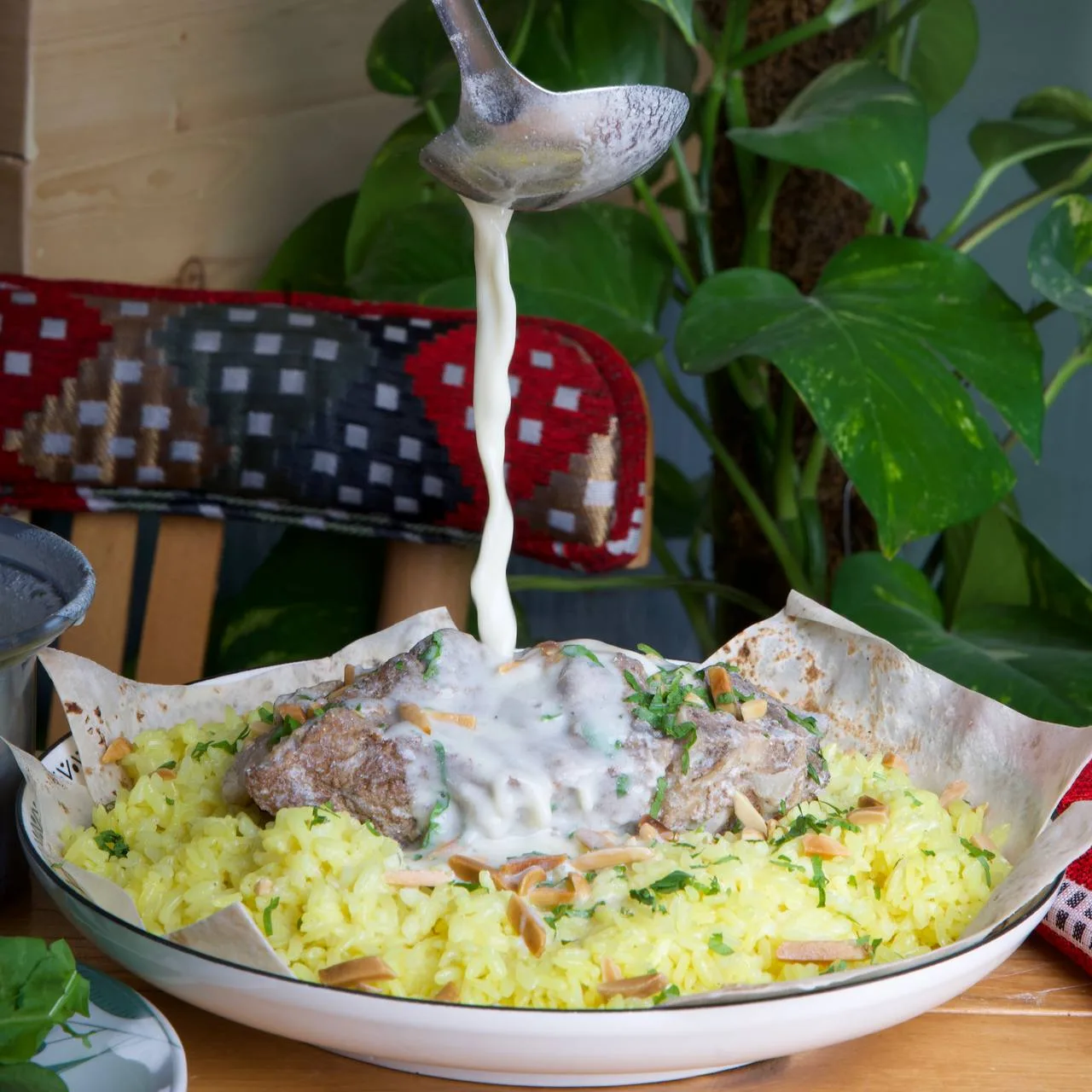
Khashoka's Jordanian Mansaf ($29) is rice, lamb, Jordanian jameed, and toasted nuts, built the way Community Impact described it when Khashoka opened in Richardson: a rice and lamb dish considered the national dish of Jordan. It's the kind of dish that shows up around communal, special-occasion eating in Jordan, plated to be shared across a table rather than portioned onto individual plates.
The jameed used for it isn't a stand-in ingredient. That sourcing runs deeper than this one dish: about 90% of Khashoka's spices, olive oil, and tahini are imported from Jordan, a detail confirmed to NBC DFW. Mansaf at a shared table, with a real jameed sauce underneath it, is a small, direct way to bring that sourcing to a Richardson dinner table. See the menu to check what else rounds out the table alongside it.
Frequently asked questions
What is jameed made of?
Jameed is made from milk, usually sheep or goat, that's fermented into yogurt, strained past the labneh stage, salted, shaped by hand, and dried until hard. That's it: milk, culture, salt, and time. No stabilizers or shortcuts get involved in the traditional process.
Can jameed go bad once it's dried?
That's the point of drying it: a properly dried jameed ball is shelf-stable and doesn't need refrigeration the way fresh yogurt does. A home cook who orders it dried can keep it in a pantry for months, breaking off and rehydrating only what a given pot of mansaf needs.
Is jameed the same as labneh?
They start from the same place, strained yogurt, but they end differently. Labneh stays soft and spreadable, served fresh with olive oil. Jameed keeps going: shaped, dried hard, and rehydrated later into a sauce, which is a different dish with a different job.