What Is Zaatar? The Wild-Thyme Blend Explained
A plain answer on what zaatar is, how it's eaten with olive oil and bread, and where to find it at Khashoka in Richardson, from manakish to the wholesale pantry.
What is zaatar?
Zaatar is a spice blend built on wild thyme, mixed with ground sumac for tang and toasted sesame seeds for crunch. It's a Levantine staple, found on breakfast tables, folded into dough, and set out next to olive oil for dipping. The name refers to both the wild thyme plant itself and the finished blend made from it.
How is zaatar traditionally eaten?
The classic pairing is simple: olive oil and bread, nothing else required. You dip the bread in oil first, then press it into the zaatar so the herbs stick. It's a mezze habit, the kind of thing that sits on a table alongside labneh and olive oil so people can build their own bite instead of waiting on a single dish to arrive.
At the table, on its own
At Khashoka, that pairing is its own menu item: Oil & Zaatar, extra virgin olive oil and wild thyme, $6. It's meant for the bread basket, not as a garnish on a bigger plate.
Baked into manakish
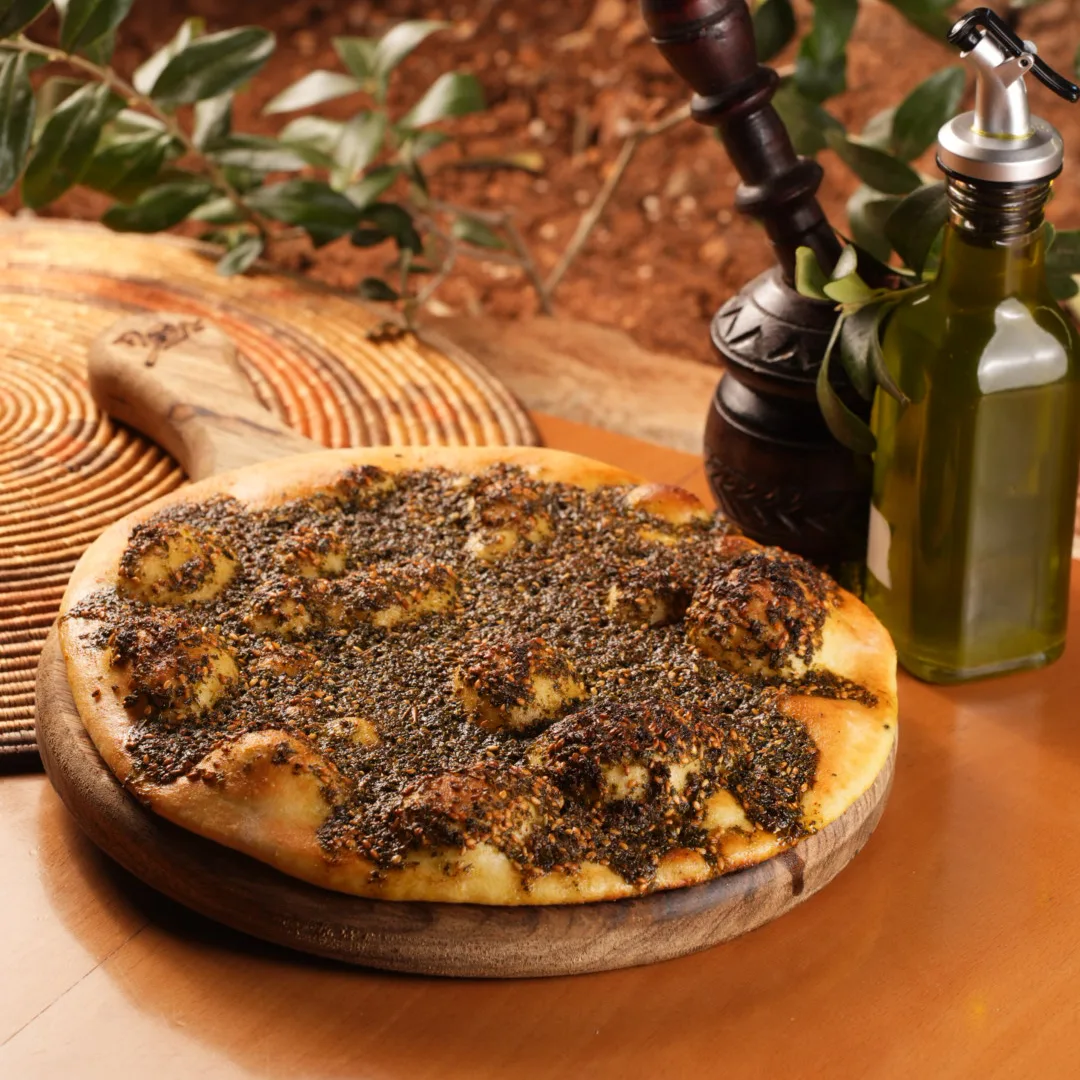
Zaatar also gets baked, not just spooned. Zaatar manakish ($8) uses the wild thyme mix directly on the dough. Wild Zaatar & Cheese Pie ($8) layers in local cheese and olive oil with the thyme leaves on top. Same herb, two different jobs: one is a topping you scoop with bread, the other is baked straight into the crust.
Where can you get zaatar in Richardson?
Khashoka serves it both ways described above, as a mezze plate and baked into manakish, at 1057 S Sherman St in Richardson. It's also part of the restaurant's wholesale pantry line, alongside hummus and olive oil, for anyone who wants it beyond a single meal. If you're a restaurant, gift buyer, or just want it in bulk, that's a conversation to have directly rather than guessing at what's available.
Ask about wholesale if you want zaatar, olive oil, or hummus outside of a dine-in order.
What does zaatar taste like?
It's earthy first, from the dried wild thyme. Then a tang cuts through, that's the sumac. Toasted sesame seeds add a nutty background note and a bit of texture against the smoother oil. None of the three ingredients dominate on their own. The blend works because thyme carries the base flavor, sumac keeps it from going flat, and sesame gives it something to chew on.
It's a different flavor profile than a dressed salad. If you want the bright, acidic side of Levantine cooking instead of the earthy side, that's closer to what shows up in a fattoush salad, where sumac appears again but in a lemony vinaigrette instead of a dry blend.
As Royal Jordanian Airlines describes it, the country's flag carrier features Khashoka among its recommended Amman dining stops, a rustic restaurant where the eating itself is hands-on: bread and fingers instead of forks, spoons set aside. Zaatar and olive oil fit that same style of eating, a shared plate you work through with bread rather than a dish plated for one person.
Frequently asked questions
Is zaatar the same as sumac?
No. Sumac is one ingredient inside zaatar, a ground dried berry that supplies the tang. Zaatar is the finished blend: wild thyme as the base, sumac stirred in for sourness, sesame seeds for crunch. Sumac on its own is sharper and more one-note; zaatar is rounder because the thyme and sesame carry it.
Can you order just zaatar without a full meal?
Yes. Oil & Zaatar is its own line on Khashoka's menu, a small plate of extra virgin olive oil and wild thyme meant for dipping bread, not a garnish on a bigger dish. It's sized and priced as a standalone mezze item, so it sits on the table alongside labneh or olives rather than only showing up baked into a manakish.
How is zaatar made?
Dried wild thyme is ground, then mixed with ground sumac and toasted sesame seeds, sometimes with salt. There's no cooking step. It's a dry pantry blend, which is why it travels and stores well and why it shows up both on the table at Oil & Zaatar and baked into manakish dough.