What is Hummus Khashoka?
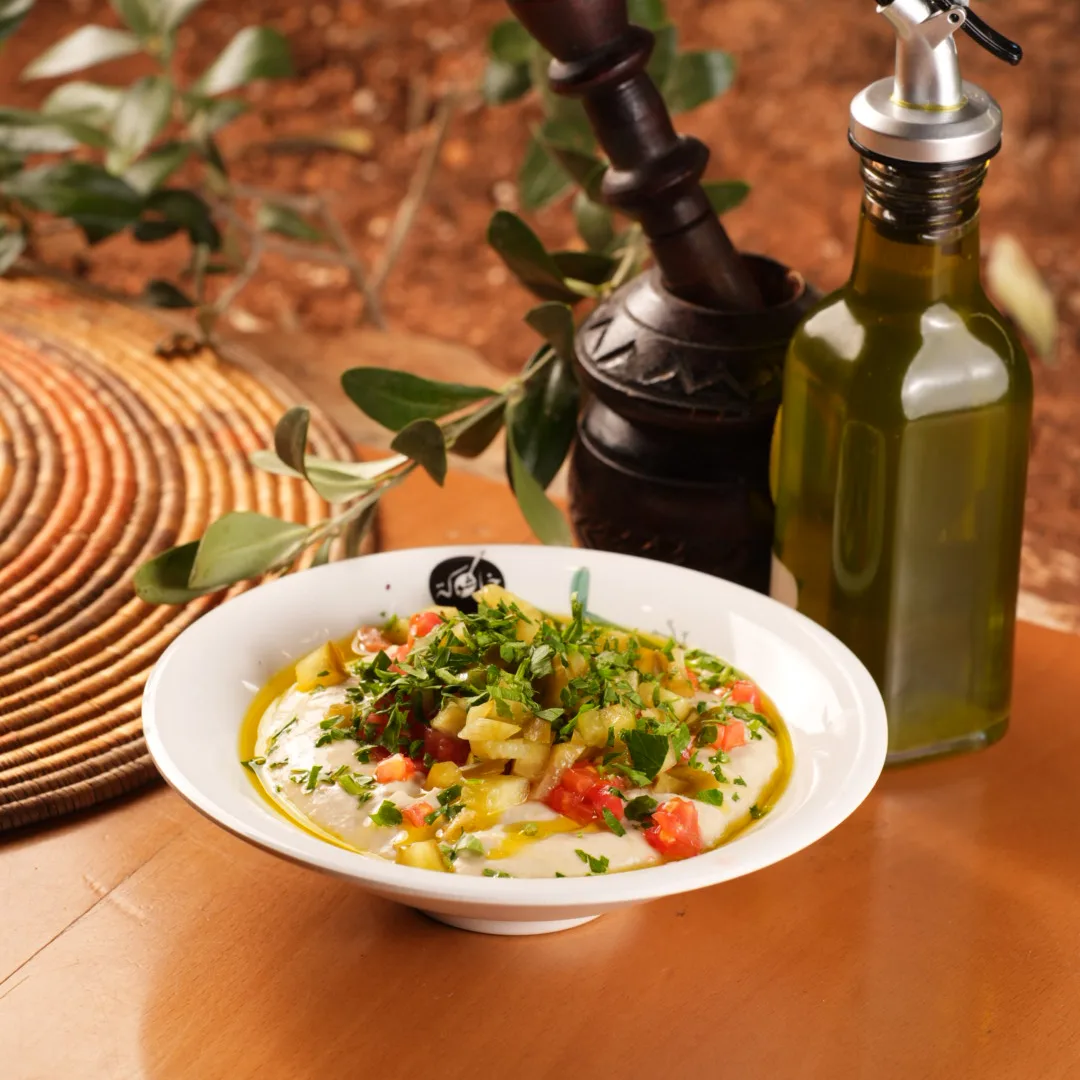
Hummus Khashoka is the restaurant's home-made hummus with diced tomatoes, pickles, and parsley folded straight into the bowl, $8. It's not a topping added tableside. The mix-ins get worked into the hummus itself, so the tang and crunch show up in the first scoop, not just the top layer.
Each spoonful mixes smooth hummus with the juicy pop of tomato, the sour crunch of pickle and a fresh, green lift from the parsley.
Plain hummus sits right next to it on the menu, also $8, made with specialty tahini and nothing else stirred in. Two bowls, same base, two different eating experiences. That's the whole point of putting them side by side on the menu instead of treating one as an upgrade of the other. See all four hummus plates we make in Richardson to compare them.
Hummus Khashoka vs. plain hummus: what actually changes
Plain hummus is about the tahini. Without anything else in the bowl, the sesame paste and the chickpeas are doing all the work, and the specialty tahini is what carries the flavor from the first bite to the last. It's a bowl built for people who want that one flavor read clearly, especially alongside a dish with a lot going on already, like mansaf or a fatteh.
Hummus Khashoka changes the texture as much as the taste. Diced tomato adds moisture and a little acidity. Pickles bring salt and a sharp bite that cuts against the richness of the tahini. Parsley adds a green, slightly bitter note and a bit of visible color across the top. None of that is there to mask the hummus underneath. It's there so the bowl doesn't taste the same at the center as it does at the edge.
| Version | What's in it | Price |
|---|---|---|
| Hummus Khashoka | Hummus, tomatoes, pickles, parsley | $8 |
| Hummus | Home-made hummus, specialty tahini | $8 |
| Hummus with Beef | Home-made hummus, topped with beef | $13 |
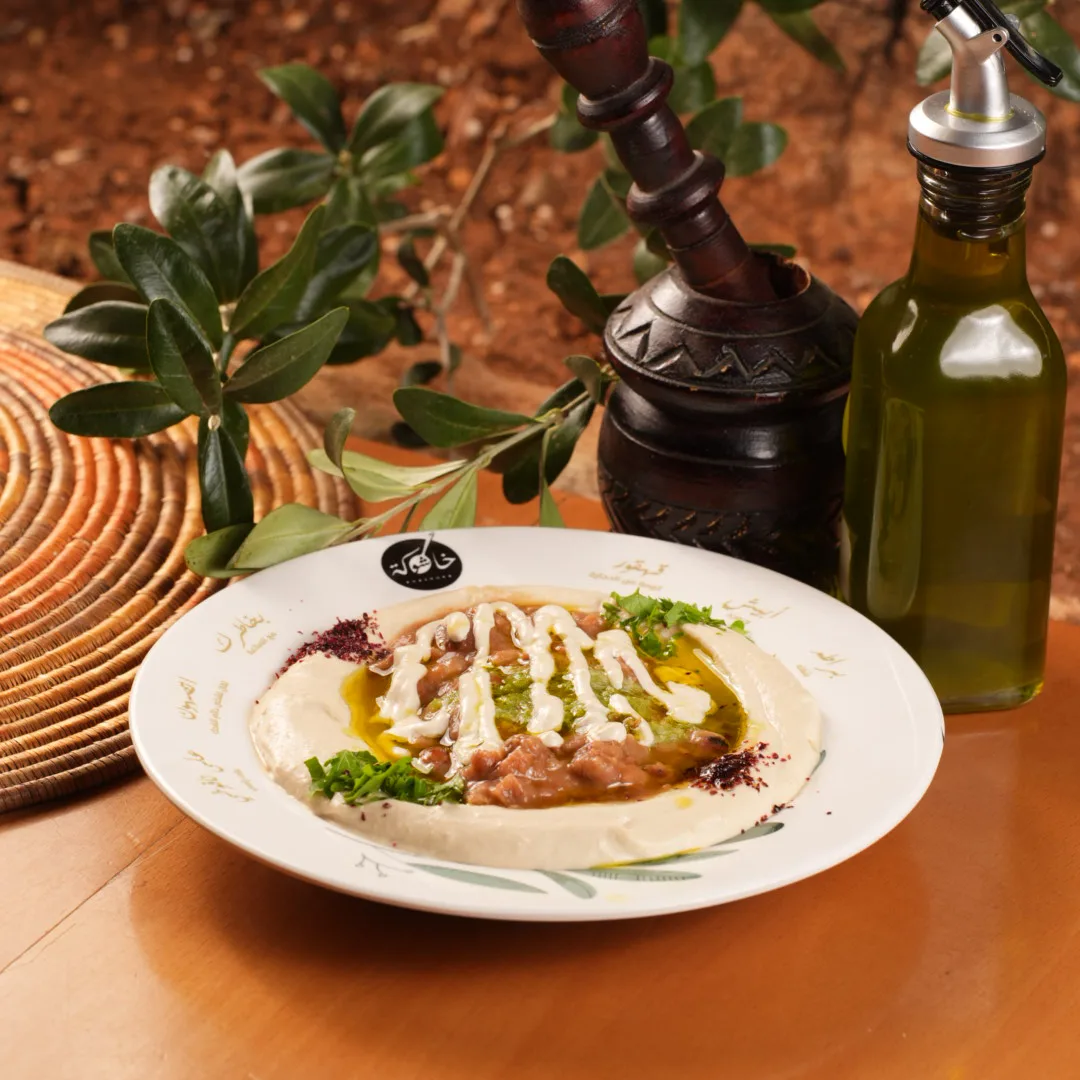
If you want a third read on the same base, Hummus with Beef ($13) swaps the mix-ins for a beef topping instead. Order it alongside the other two and you can taste how much the same hummus changes depending on what sits on top of it.
Why the dish carries the restaurant's name
Khashoka means spoon, specifically the everyday word for the wide communal serving spoon used in Jordan, Turkish-rooted from the word kaşık. It's the spoon that gets passed around a shared table, the one that scoops from a single bowl instead of a plate portioned out for one person.
Hummus Khashoka is built for that same motion. Because the tomatoes, pickles, and parsley are mixed in rather than piled on top, no two scoops come out identical. One person gets more pickle, the next gets more parsley, and the bowl keeps changing as it empties, which is exactly what a dish meant to be passed around should do.
It's also a small argument against treating hummus as one generic thing. "Ninety percent of all our spices, the olive oil, the sesame sauce, everything comes all the way from Jordan," owner Muhammad Albakri told NBC DFW. That is what a plain bowl of hummus is actually resting on: the sesame sauce isn't incidental, it's the reason the plain version holds up without anything else in the bowl.
Building a mezze table around it
Hummus Khashoka works as an opener alongside Jordanian Olives ($7) and a Pickles Plate ($4), since both echo what's already mixed into the bowl without repeating it exactly. Add labneh or a manakish and you've got a mezze spread that doesn't need a main dish to feel complete.
If the table is building toward something heavier, mansaf is considered the national dish of Jordan, and a mezze round of hummus, olives, and pickles is the traditional way to start before it arrives. For more on how the mezze table gets built out, see the labneh post and the fattoush post, two other dishes that share the same table.
Ready to build your own spread? See the menu or call (469) 277-7477 to order ahead. Bring the family and pass the bowl around, that's what it's made for.