Khashoka's Home-Made Falafel: The $7 Benchmark for a Levantine Kitchen
Why Khashoka's $7 home-made falafel functions as a craft benchmark for the whole kitchen, and how to build a mezze plate around it in Richardson.
Why falafel reveals a kitchen's skill
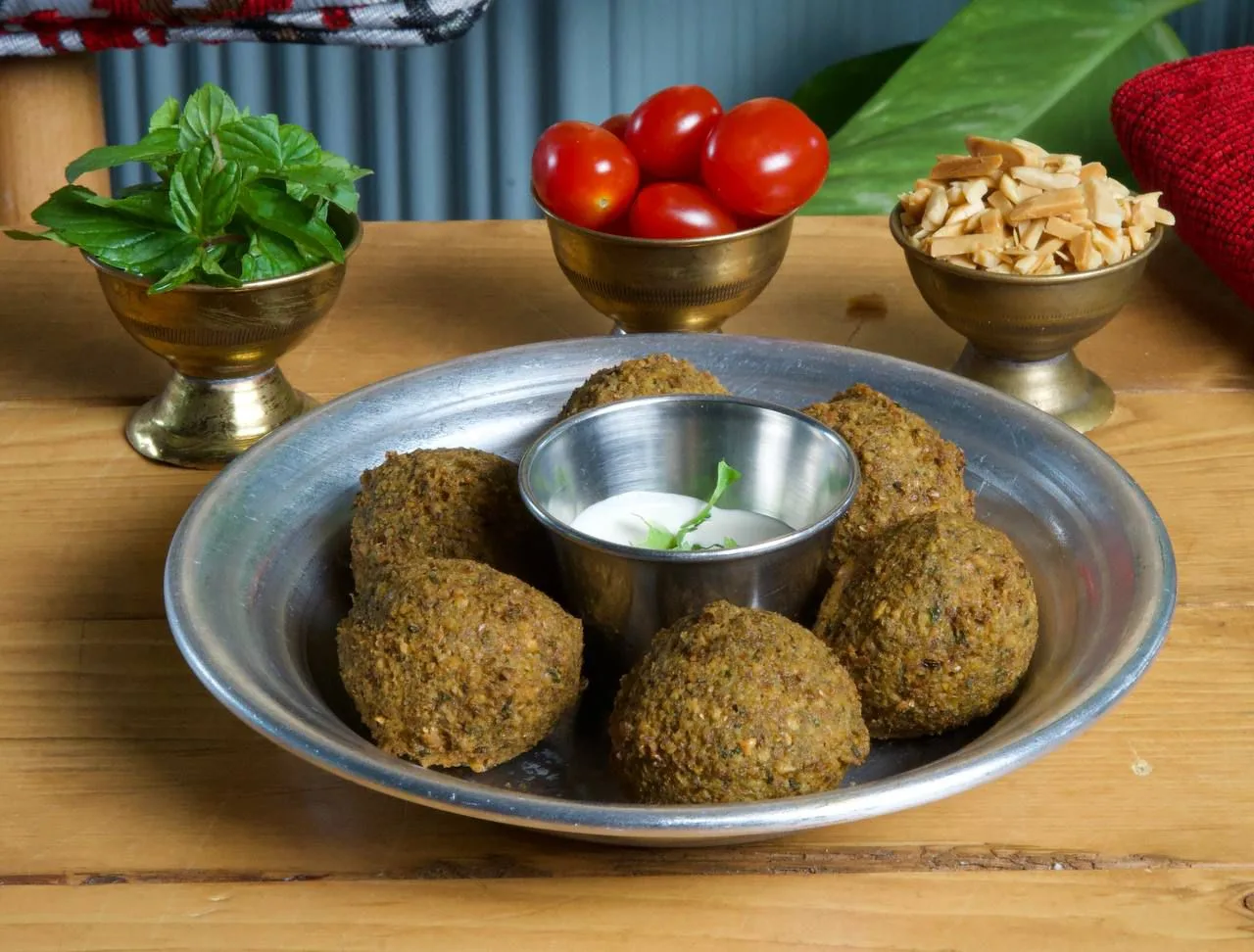
Falafel is the dish that tells you what a kitchen actually values, because there's nowhere to hide in it. It's chickpeas, herbs, and spice, fried to order. No sauce covers a bad batch, no protein masks stale oil. Khashoka's home-made falafel is $7, and the price isn't the point. What it's made from and when it's fried is.
A lot of restaurants in this category treat falafel as filler, something pre-formed and thawed to round out a mezze order. That's a shortcut you can taste immediately: gray interior, flat spice, oil that's been reused past its life. The Dallas Observer's review of Khashoka's fatteh put it plainly: "It was great. It was rich. It was different. We'd order it again in a heartbeat." That same standard of care is what has to show up in a $7 item, or it doesn't mean anything on the rest of the menu.
Falafel isn't the most expensive thing on the table. That's exactly why it works as a test. If the kitchen is willing to grind fresh herbs and fry to order for a $7 plate, you know what's happening with the $29 mansaf.
How Khashoka's falafel fits a Richardson mezze spread
A mezze table isn't a lineup of separate dishes competing for attention. It's a set of contrasts built to sit next to each other. Falafel's job in that spread is texture: a crisp, herb-flecked exterior and a soft, green interior, placed next to the smoother, creamier dishes around it.
Put falafel ($7) next to Hummus ($8), a home-made blend with specialty tahini, and a Pickles Plate ($4) of Jordanian home-made pickles, and you've got a composed starter before anything else hits the table. The hummus is smooth. The falafel gives you something to bite into. The pickles cut both with acid and salt. None of it is trying to be the biggest dish on the table.
That's a different way to think about value than portion size. Falafel here isn't meant to fill you up on its own. It's meant to hold its place in a spread where several small, deliberate dishes add up to a full meal. You can see the full range on the menu, and get a feel for how the mezze section is built around exactly this kind of pairing.
The herbs and spice story behind the green inside
Falafel's color comes from what's ground into it, not from food coloring or a shortcut mix. Fresh herbs, worked into the chickpea base along with a specific spice blend, are what give the interior its green cast and the exterior its aroma when it hits hot oil. Cut into a piece that's been sitting under a heat lamp for two hours and the color's already gone flat. Cut into one fried to order and it isn't.
Oil matters here too. As the founders told Scene Eats, "where we use natural ghee and oil, they exclusively cook with olive oil. These subtle differences translate into an entirely new taste." That's not a garnish decision, it's a cooking decision that runs through the whole kitchen, falafel included.
The ingredients backing that decision mostly come from one place. About 90% of Khashoka's spices, olive oil, and tahini are imported from Jordan, according to the owner's account to NBC DFW during a piece on DFW restaurants' World Cup menus. That's not a stat about falafel specifically, but it's the supply line the falafel spice blend and frying oil both run through.
Building a full plate with falafel at the center
For a table of two or three, falafel works best as the textured anchor of a starter course, not a solo order. A practical build: falafel ($7) for texture, hummus ($8) for the creamy base, a pickles plate ($4) for acid and salt, and fattoush ($9), prepared fresh daily, to bring in crunch and brightness from the vegetables and toasted bread. Read more about Khashoka's fattoush salad if you want the full ingredient list before you order.
That's four dishes, none of them competing to be the main event, all of them built to be passed around. If anyone at the table is keeping things plant-forward, it's worth knowing whether falafel is vegan before you round out the rest of the order.
The whole spread is made for sharing, not for one person eating alone at a table built for a group. If you want to see it in person or start an order, visit the Richardson location at 1057 S Sherman St, or call (469) 277-7477.
Frequently asked questions
What makes falafel authentic?
Authentic falafel starts with dried chickpeas, ground with fresh herbs and a specific spice blend, then fried to order in oil that hasn't been sitting for hours. At Khashoka, that's home-made falafel for $7, cooked exclusively in olive oil rather than a ghee-oil mix, which is the same distinction the kitchen's Jordanian roots are built on.
Is Khashoka's falafel vegan?
Falafel itself is chickpeas, herbs, and spices, no animal products involved. Whether the full plate stays vegan depends on what you order alongside it. For the full breakdown of which sides and dips keep the table plant-forward, see our post on whether falafel is vegan.
How much does falafel cost at Khashoka in Richardson?
Home-made falafel is $7 at Khashoka, 1057 S Sherman St in Richardson. It's priced as a mezze component, meant to sit alongside hummus ($8) and a pickles plate ($4) rather than stand alone as a single entree.